How have you adapted to the changes brought on by the Covid-19 pandemic?
I’ve adapted in simple but meaningful ways. Two parts of my routine that have changed are when I go grocery shopping—I now go during the day—and how I immediately wash my hands as soon as I get home. Since I have Rheumatoid Arthritis, which puts me in the compromised immune category, I’ve also become more cautious in public. I make a point to keep my hands away from my face when I’m out.
In February, I caught COVID for the second time. That experience reminded me how important it is to be prepared. Now, I make sure to keep over-the-counter medication on hand, just in case. These may seem like small changes, but they’ve become a meaningful part of how I look after my health.
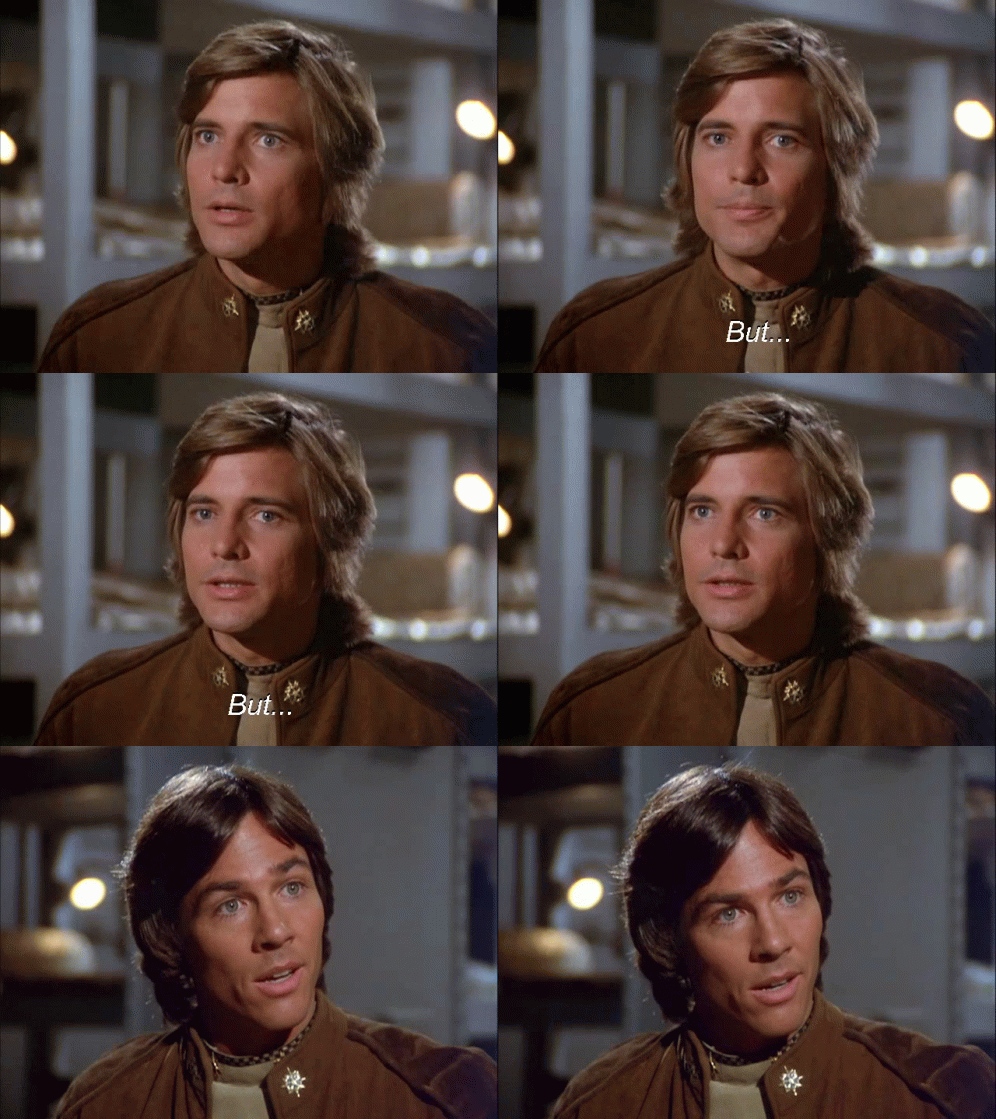
Battlestar Galactica inspired my love for epic space battles…
What TV shows did you watch as a kid?
BattleStar Galactica
The show ignited my imagination, opening up a world of possibilities in Science Fiction.
When I was a child, it was the epic space battles, thrilling adventures, and the strong sense of family that drew me into this universe. It was fun then, and it still is today.
Now, as an adult, the show has taught me that science fiction is full of endless possibilities.
Camping in the woods away from civilization as an adult, no.
Sleeping in a thick, dark forest and not knowing what is lurking behind the trees in a tent doesn’t sound like a good time to me. Yes, I do have active imagination.
Have you ever used a mop to clean your walls? I tried it, and here’s what happened. Read on to find out how I did it, what I learned, and if I’d do it again.
When is the last time you took a risk? How did it work out?
Introduction
When it comes to cleaning, I usually stick to the basics. But yesterday, I decided to try something new after watching a video that showed people using mops to clean walls. I thought, why not give it a shot? What could go wrong?
The Experiment
Last month, I bought a new mop, but it wasn’t one of those expensive ones. I went for a budget-friendly option, not wanting to overspend on a cleaning experiment. The video I saw made it look easy—just grab a mop, some cleaning solution, and go to town on your walls. So, I did just that.
The Process
I started in my bathroom, where the door and walls could use a good scrubbing. The mop made it easy to reach high spots, and it covered a lot of ground quickly. It did take a bit of muscle to scrub, though. The whole process was surprisingly simple, and I didn’t have to crawl on the floor or climb a ladder.
The Results
By the time I was done, I was feeling pretty sore. It was like a mini-workout, but the results were totally worth it. My bathroom door and hallway wall were sparkling clean, and I didn’t have to spend hours scrubbing with a sponge or cloth.
Would I Do It Again?
Even though I was a bit achy afterward, I think I would definitely use a mop to clean walls again. It’s a quick and efficient way to cover a lot of space. Plus, it’s easier on your back since you’re standing the whole time.
Your Turn
Have you ever used a mop to clean your walls? I’d love to hear about your experience. Share your cleaning tips in the comments, and let’s swap stories. Sometimes, the simplest solutions are the most effective.
I learned how to advocate for myself to receive the accommodations I needed at school.
I went against the advice of the administration and the school counselors by pursuing a diagnosis for a learning disability. At that time, my school district refused to acknowledge it as dyslexia. When asked why, I explained that I was struggling to complete homework.
Their solution was simply to ‘try harder,’ to stop ‘wasting time,’ and to cease being ‘lazy.’ They refused to acknowledge my learning disability, citing my average state scores as evidence that I was passing.
What they refused to acknowledge was my struggle to complete homework and keep up with my reading. While my test scores were average, the school district ignored the fact that I was consistently the last one to finish my testing.
I finally received a diagnosis of a learning disability, and that was a turning point for me.


 Alexandra Mars